
FINAL REVIEW FOR NCLEX-RN + NCLEX-PN
Review what
you missed.
Already using a question bank? Pick a topic you missed, review it with a visual mind map, and test yourself again with 200 bonus practice questions.
2 free practice packsOne-time payment in USD · PDFs sent by email after payment is confirmed
 RN + PNboth editions
included
Student reviews.
What’s inside each PDF?
Open any PDF outline to see its topics, practice sections, and page numbers.
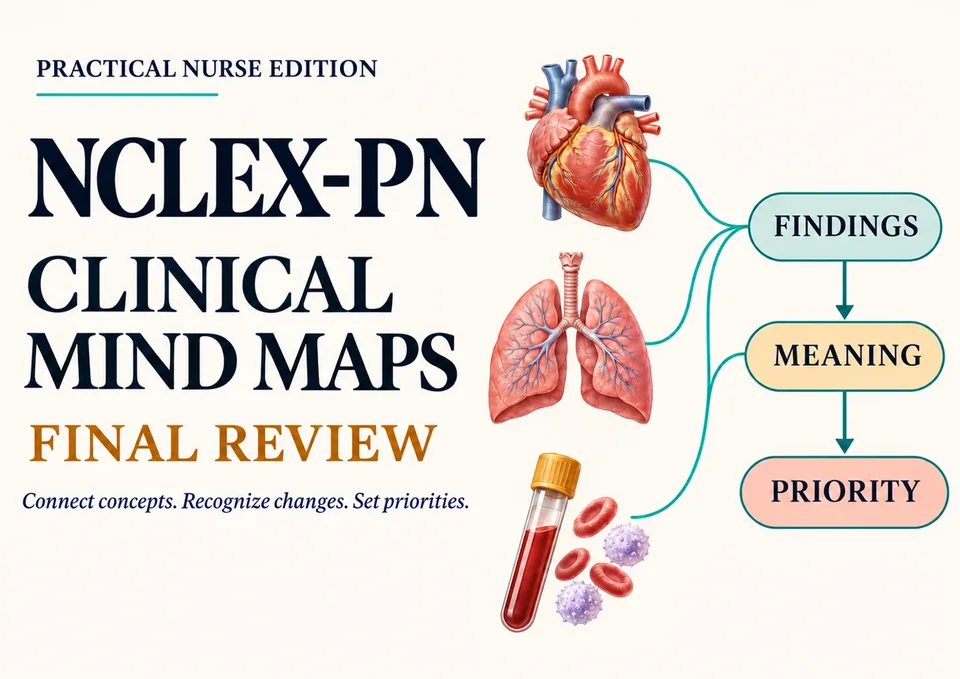
NCLEX-RN Clinical Mind Maps
Review RN priorities, delegation, IV therapy, and other clinical topics with visual maps. Each of the eight sections ends with four questions and a separate answer page.
Management of CareMaps 4–15 · Questions p. 16 · Answers p. 17
- Nursing Process — ADPIEp. 4
- Clinical Judgmentp. 5
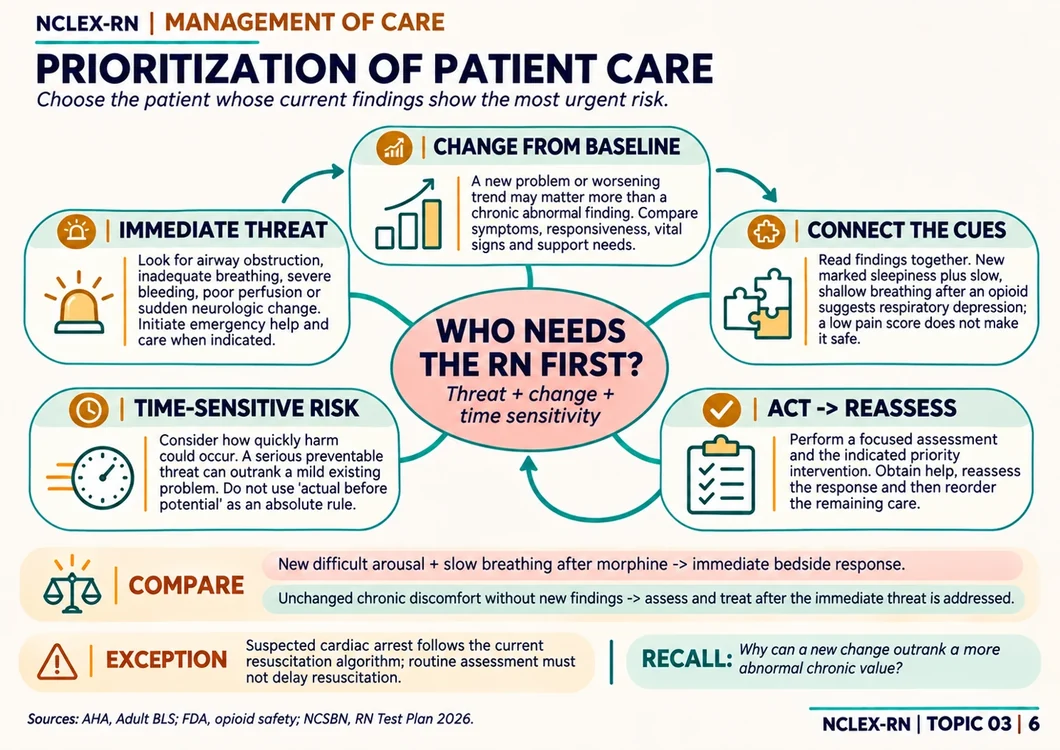
- Prioritization of Patient Carep. 6
- Delegation of Nursing Tasksp. 7
- Assignment of Patient Carep. 8
- Leadership and Managementp. 9
- Patient Rights and Advocacyp. 10
- Informed Consentp. 11
- Ethical Principles in Nursingp. 12
- Legal Responsibilitiesp. 13
- Communication and Interprofessional Collaborationp. 14
- Discharge Planning and Continuity of Carep. 15
Safety & Infection ControlMaps 18–25 · Questions p. 26 · Answers p. 27
- Standard Precautionsp. 18
- Transmission-Based Precautionsp. 19
- Personal Protective Equipment — PPEp. 20
- Medical vs. Surgical Asepsisp. 21
- Patient Safety and Fall Preventionp. 22
- Medication Safety and Error Preventionp. 23
- Sterilization, Disinfection and Isolationp. 24
- Emergency Preparedness and Disaster Managementp. 25
Health Promotion & MaintenanceMaps 28–36 · Questions p. 37 · Answers p. 38
- Growth and Development Across the Lifespanp. 28
- Pediatric Developmental Milestonesp. 29
- Prenatal Care and Pregnancyp. 30
- Labor and Delivery — Normal Progress and Monitoringp. 31
- Labor and Delivery — Complications and Prioritiesp. 32
- Postpartum Carep. 33
- Newborn Assessment and Carep. 34
- Preventive Care — Immunizationsp. 35
- Preventive Care — Screening and Risk Reductionp. 36
Psychosocial IntegrityMaps 39–45 · Questions p. 46 · Answers p. 47
- Mental Health Disorders Overviewp. 39
- Anxiety and Depressionp. 40
- Bipolar and Other Mood Disordersp. 41
- Schizophrenia and Psychotic Disordersp. 42
- Substance Use and Withdrawalp. 43
- Therapeutic Communication and Crisis Interventionp. 44
- Coping, Grief, Loss and End-of-Life Carep. 45
Basic Care & ComfortMaps 48–53 · Questions p. 54 · Answers p. 55
- Activities of Daily Living — ADLsp. 48
- Nutrition and Therapeutic Dietsp. 49
- Hydration and Fluid Balancep. 50
- Mobility, Positioning and Body Mechanicsp. 51
- Pain Management and Comfort Measuresp. 52
- Elimination, Bowel and Bladder Carep. 53
Pharmacological & Parenteral TherapiesMaps 56–71 · Questions p. 72 · Answers p. 73
- Pharmacology Fundamentalsp. 56
- Medication Administration and Dosage Calculationsp. 57
- Cardiovascular Medications — BP, Rate and Rhythmp. 58
- Cardiovascular Medications — Ischemia, Lipids and Digoxinp. 59
- Respiratory Medicationsp. 60
- Diabetes Medications — Insulinp. 61
- Diabetes Medications — Noninsulin Agentsp. 62
- Antibiotics and Antimicrobialsp. 63
- Analgesics, Opioids and Reversal Agentsp. 64
- Neurological Medicationsp. 65
- Psychiatric Medicationsp. 66
- Gastrointestinal Medicationsp. 67
- Diuretics and Electrolyte-Related Medicationsp. 68
- IV Therapy and Fluid Administrationp. 69
- Blood Products and Transfusion Reactionsp. 70
- Anticoagulants, Bleeding and Reversalp. 71
Reduction of Risk PotentialMaps 74–84 · Questions p. 85 · Answers p. 86
- Laboratory Values — CBC and Coagulationp. 74
- Laboratory Values — Renal, Hepatic and Metabolic Testsp. 75
- Electrolyte Imbalances — Sodium and Potassiump. 76
- Electrolyte Imbalances — Calcium, Magnesium and Phosphatep. 77
- Diagnostic Tests and Proceduresp. 78
- ECG — Rhythm Recognition and Patient Assessmentp. 79
- ECG — Dangerous Changes and Immediate Prioritiesp. 80
- Preoperative and Postoperative Nursing Carep. 81
- Complications and Early Warning Signsp. 82
- Wound Care and Pressure Injury Preventionp. 83
- Monitoring High-Risk Patientsp. 84
Physiological AdaptationMaps 87–107 · Questions p. 108 · Answers p. 109
- Cardiovascular Disordersp. 87
- Heart Failurep. 88
- Acute Coronary Syndrome and Myocardial Infarctionp. 89
- Respiratory Disorders — Asthma, COPD and Pneumoniap. 90
- Oxygenation and Oxygen Deliveryp. 91
- Respiratory Failure — Recognition and Escalationp. 92
- Strokep. 93
- Seizuresp. 94
- Increased Intracranial Pressurep. 95
- Diabetes, Hypoglycemia, DKA and HHSp. 96
- Thyroid Disorders and Emergenciesp. 97
- Renal Disorders and Acute Kidney Injuryp. 98
- Gastrointestinal Disordersp. 99
- Hepatic Disordersp. 100
- Musculoskeletal Disordersp. 101
- Hematological Disorders and Anemiasp. 102
- Immune Disordersp. 103
- Sepsis — Recognition and Priority Carep. 104
- Shock and Multisystem Organ Dysfunctionp. 105
- Burnsp. 106
- Trauma and Emergency Conditionsp. 107
Contents & Topic Finder p. 2 · How to Use p. 3 · Sources & Update Notes pp. 110–111
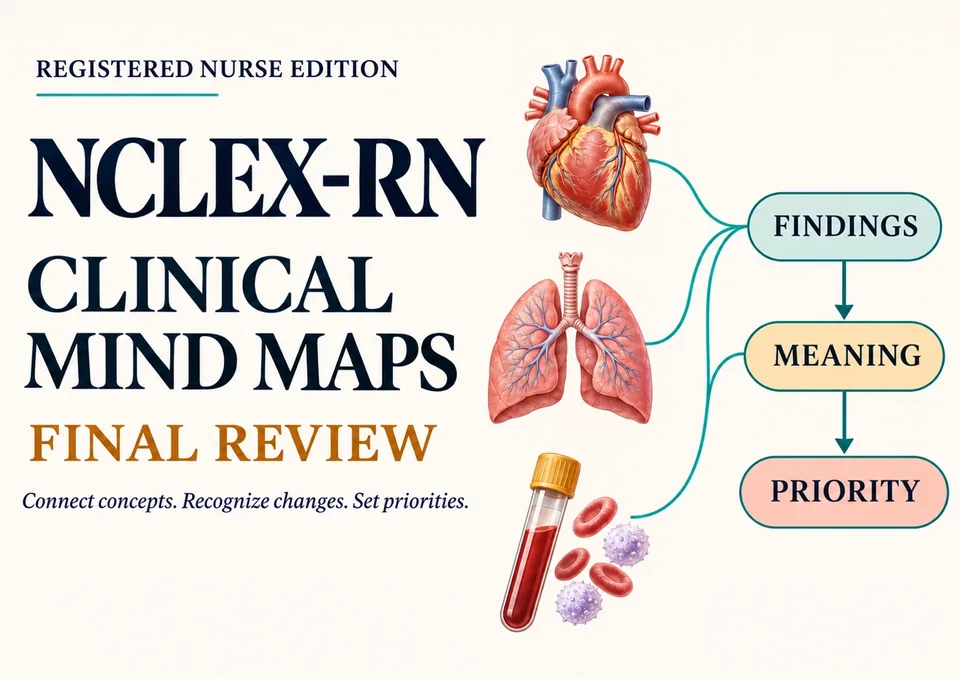
NCLEX-PN Clinical Mind Maps
Review coordinated care, LPN/LVN responsibilities, medications, and changes to report with visual maps. Each of the eight sections ends with four questions and a separate answer page.
Coordinated CareMaps 4–14 · Questions p. 15 · Answers p. 16
- Nursing Process — The LPN/LVN Contributionp. 4
- Clinical Judgment — Recognize, Respond and Reassessp. 5
- Patient Care Coordinationp. 6
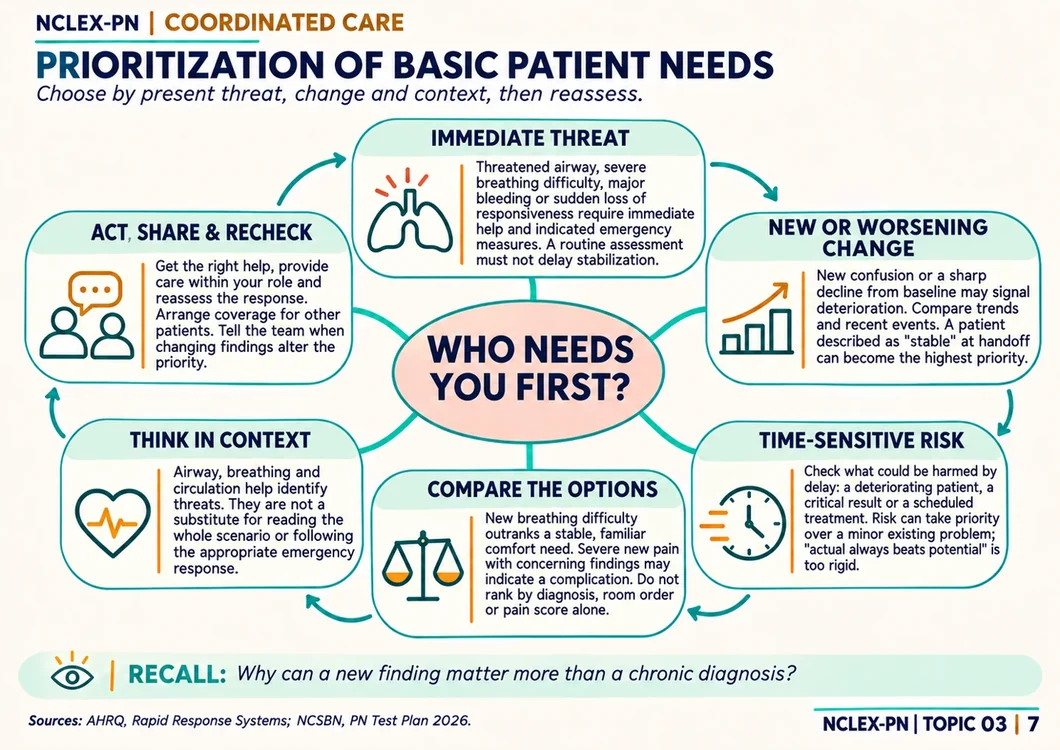
- Prioritization of Basic Patient Needsp. 7
- Assignment and Delegation Principlesp. 8
- Scope of Practice — LPN/LVN Responsibilitiesp. 9
- Communication with the RN and Healthcare Teamp. 10
- Patient Rights and Advocacyp. 11
- Ethical and Legal Responsibilitiesp. 12
- Documentation and Reportingp. 13
- Discharge Planning and Continuity of Carep. 14
Safety & Infection ControlMaps 17–23 · Questions p. 24 · Answers p. 25
- Standard Precautionsp. 17
- Contact, Droplet and Airborne Precautionsp. 18
- Personal Protective Equipment — PPEp. 19
- Hand Hygiene and Infection Preventionp. 20
- Patient Safety and Fall Preventionp. 21
- Medication Safety and Error Reportingp. 22
- Safe Patient Handling and Emergency Proceduresp. 23
Health Promotion & MaintenanceMaps 26–31 · Questions p. 32 · Answers p. 33
- Growth and Development Across the Lifespanp. 26
- Pediatric Care and Developmental Milestonesp. 27
- Prenatal and Maternal Carep. 28
- Postpartum Care — Expected Recovery and Warning Signsp. 29
- Newborn Care — Transition, Feeding and Safetyp. 30
- Preventive Health, Immunizations and Screeningp. 31
Psychosocial IntegrityMaps 34–38 · Questions p. 39 · Answers p. 40
- Therapeutic Communicationp. 34
- Anxiety, Depression and Mood Disordersp. 35
- Mental Health Disorders and Behavioral Changesp. 36
- Substance Use and Withdrawalp. 37
- Grief, Loss and End-of-Life Carep. 38
Basic Care & ComfortMaps 41–45 · Questions p. 46 · Answers p. 47
- Activities of Daily Living — ADLsp. 41
- Nutrition, Hydration and Therapeutic Dietsp. 42
- Mobility, Positioning and Body Mechanicsp. 43
- Pain Management and Comfort Measuresp. 44
- Bowel, Bladder and Personal Hygiene Carep. 45
Pharmacological TherapiesMaps 48–57 · Questions p. 58 · Answers p. 59
- Pharmacology Fundamentalsp. 48
- Medication Administration and Dosage Calculationsp. 49
- Cardiovascular and Antihypertensive Medicationsp. 50
- Respiratory Medicationsp. 51
- Gastrointestinal Medicationsp. 52
- Insulin — Timing, Meals and Hypoglycemiap. 53
- Noninsulin Diabetes Medicationsp. 54
- Antibiotics and Antimicrobialsp. 55
- Analgesics and Common Pain Medicationsp. 56
- Medication Side Effects, Allergies and Adverse Reactionsp. 57
Reduction of Risk PotentialMaps 60–67 · Questions p. 68 · Answers p. 69
- Common Laboratory Valuesp. 60
- Electrolytes — Sodium and Potassiump. 61
- Electrolytes — Calcium and Magnesiump. 62
- Vital Signs and Abnormal Findingsp. 63
- Diagnostic Tests and Specimen Collectionp. 64
- Wound Care and Pressure Injury Preventionp. 65
- Postoperative Monitoring and Complicationsp. 66
- Recognizing and Reporting Patient Deteriorationp. 67
Physiological AdaptationMaps 70–81 · Questions p. 82 · Answers p. 83
- Cardiovascular Disorders — Heart Failure and Perfusionp. 70
- Cardiovascular Disorders — Ischemia and Urgent Changesp. 71
- Respiratory Disorders — Asthma, COPD and Pneumoniap. 72
- Diabetes — Hypoglycemia, DKA and HHSp. 73
- Thyroid Disorders — Routine Findings and Emergenciesp. 74
- Renal and Urinary Disordersp. 75
- Gastrointestinal Disordersp. 76
- Neurological Disordersp. 77
- Musculoskeletal Disordersp. 78
- Infectious Diseases and Sepsis Recognitionp. 79
- Fluid Imbalances and Shock Recognitionp. 80
- Chronic Diseases and Common Complicationsp. 81
Contents & Topic Finder p. 2 · How to Use p. 3 · Sources & Update Notes pp. 84–85
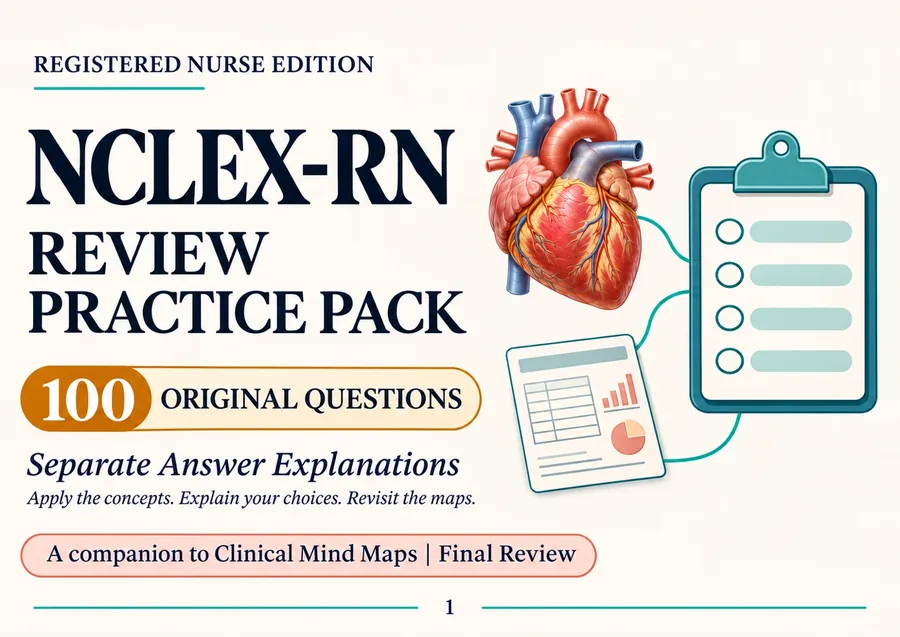 NCLEX-RN 100-Question Practice Pack
Practice with 100 original, single-best-answer questions. The answer key explains every choice and points you to related RN mind map pages.
-
Management of Care
Patient prioritization, delegation, and assigning care.
Items 1–20 · Questions pp. 3–7 · Answers pp. 28–32 -
Safety & Infection Control
Hand hygiene, isolation precautions, and infection prevention.
Items 21–32 · Questions pp. 8–10 · Answers pp. 33–35 -
Health Promotion & Maintenance
Developmental milestones, pregnancy, and postpartum concerns.
Items 33–40 · Questions pp. 11–12 · Answers pp. 36–37 -
Psychosocial Integrity
Therapeutic communication, panic, and suicide risk.
Items 41–48 · Questions pp. 13–14 · Answers pp. 38–39 -
Basic Care & Comfort
Activities of daily living, swallowing, and tube feeding.
Items 49–56 · Questions pp. 15–16 · Answers pp. 40–41 -
Pharmacological & Parenteral Therapies
Dosage calculations, infusion timing, and heparin.
Items 57–72 · Questions pp. 17–20 · Answers pp. 42–45 -
Reduction of Risk Potential
Postoperative changes, lab trends, and electrolyte imbalances.
Items 73–84 · Questions pp. 21–23 · Answers pp. 46–48 -
Physiological Adaptation
Cardiac symptoms, heart failure, and respiratory changes.
Items 85–100 · Questions pp. 24–27 · Answers pp. 49–52
How to Use & Contents p. 2 · Questions pp. 3–27 · Answers & explanations pp. 28–52
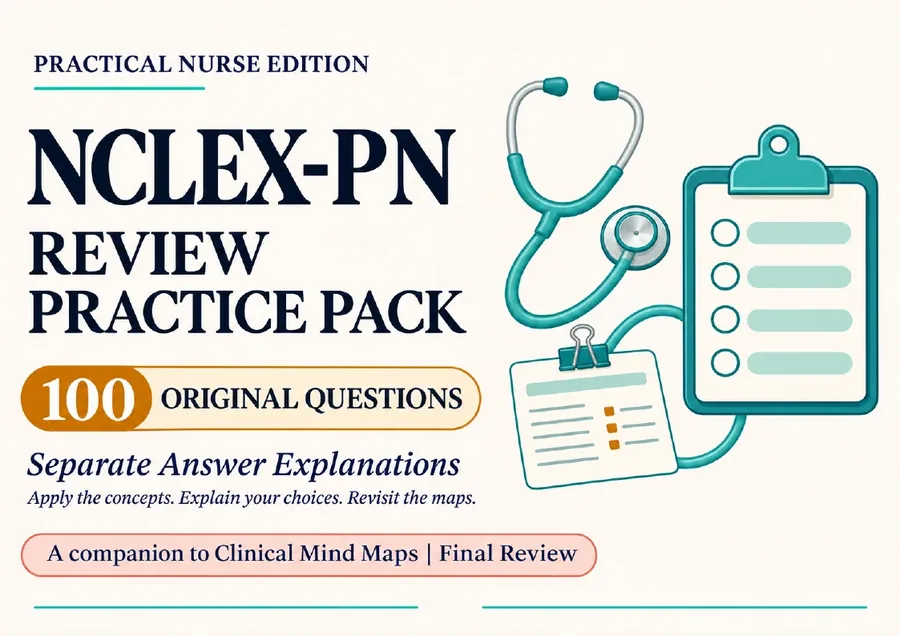 NCLEX-PN 100-Question Practice Pack
Practice with 100 original, single-best-answer questions. The answer key explains every choice and points you to related PN mind map pages.
-
Coordinated Care
LPN/LVN scope, task assignment, and care coordination.
Items 1–20 · Questions pp. 3–7 · Answers pp. 28–32 -
Safety & Infection Prevention and Control
Hand hygiene, influenza precautions, and PPE.
Items 21–32 · Questions pp. 8–10 · Answers pp. 33–35 -
Health Promotion & Maintenance
Child development, fetal movement, and postpartum changes.
Items 33–40 · Questions pp. 11–12 · Answers pp. 36–37 -
Psychosocial Integrity
Therapeutic communication, grief, and anxiety.
Items 41–52 · Questions pp. 13–15 · Answers pp. 38–40 -
Basic Care & Comfort
Mobility aids, wheelchair transfers, and swallowing safety.
Items 53–60 · Questions pp. 16–17 · Answers pp. 41–42 -
Pharmacological Therapies
Oral doses, infusion rates, and medication monitoring.
Items 61–76 · Questions pp. 18–21 · Answers pp. 43–46 -
Reduction of Risk Potential
Lab results, orthostatic symptoms, and specimen collection.
Items 77–88 · Questions pp. 22–24 · Answers pp. 47–49 -
Physiological Adaptation
Heart failure, oxygen therapy, and diabetes sick-day care.
Items 89–100 · Questions pp. 25–27 · Answers pp. 50–52
How to Use & Contents p. 2 · Questions pp. 3–27 · Answers & explanations pp. 28–52
THE REVIEW KIT
Both editions.
One bundle.
2 free bonuses
200 practice questions
NCLEX Final Review Bundle
Registered Nurse + Practical Nurse
- NCLEX-RN Clinical Mind Maps90 maps across 111 pages
- NCLEX-PN Clinical Mind Maps64 maps across 85 pages
- Both bonus practice packs200 questions in total with explanations for every answer choice
You’ll receive all four PDFs at the email address you use at checkout once your payment is confirmed.
Before you buy.
Do I get both NCLEX editions?
Yes. The bundle includes the RN and PN mind map collections, plus a separate 100-question practice pack for each exam.
Can I use it with a question bank?
Yes. After a practice set, pick a topic you missed and open the matching map. Then try a question from your RN or PN practice pack. The answer key explains every choice.
Who is this bundle for?
It’s for NCLEX-RN and NCLEX-PN candidates who’ve covered the basics and want a focused final review. Start with the topics you missed in a practice set and use the included questions to check your understanding.
How will I receive my bundle?
Once your payment is confirmed, we’ll send the bundle to the email address you entered at checkout.
Can I print the pages?
Yes. All four PDFs are laid out in landscape A4. For US Letter paper, choose landscape orientation and “Fit to page” in your print settings.